Other Turtle Discussion :: found baby turtle

Non-care related topics here.

Post Posted: Mon Mar 05, 2007 9:05 pm   

yeah, i was looking at him on my desk and comparing pics online. the bumps on his back even looked pretty common...


hes doin pretty good although im worried because i dont think he has eatin yet.he has turtle pellot food and lettuce any ideas? i think i will throw some carrot scraps in there too....

i added alot more water in his little tupperware and such so he can swim around. and hes got a little place to bask until i make better arrangements.
imnothardcore
 
Posts: 5
Joined: Mar 4, 2007

Post Posted: Mon Mar 05, 2007 9:12 pm   

Here's some tips:

http://www.redearslider.com/entice_eating.html

Of course, he's probably not a RES - don't know what he would find appetizing. A RES will love things like tuna and shrimp. A wriggling earth worm looks like good eating to them too. If the earthworm is too big, you can cut it in pieces.
SpotsMama
User avatar
SpotsMama
Retired Mod
 
Posts: 8079
Joined: Jun 7, 2006
Location: Mesquite Texas

Post Posted: Mon Mar 05, 2007 10:09 pm   

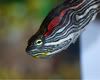
I did a little research on the diamondbacks and they are quite funny looking- almost alien with their pale heads.
But anyways, I don't know if you want to try to fool around with making the water brackish- it seems rather intense to me, and you ahve to get the right levels of sea salt- but perhaps that's one thing inhibiting his eating, although some owners apparently get by just using fresh water.
I would bribe the little guy to eat with something like bloodworms or krill, that's how I got my hatchling started.

Good luck!!
User avatar
megcornell
Retired Mod
 
Posts: 3206
Joined: Apr 30, 2006
Location: New York, NY

Post Posted: Tue Mar 06, 2007 10:58 am   

To Salt or Not to Salt
This is the question most often asked about this species. The answer is unfortunately: yes and no. There are many examples of people successfully keeping this species in fresh water and just as many examples of people failing to be able to do so yet having failing animals turned around by exposure to brackish water. . The following advice is offered as the best combination of conditions offering the greater chances of success.


Wild caught adults need be kept in brackish water, fresh wild caught specimens must be kept in brackish water with a specific gravity of 1.018 measured with a hydrometer* (see note below) for the first six months. This can then be lowered down to 1.014 to 1.016. Without salt most wild caught animals will develop shell rot and have buoyancy problems. At salinity levels of 1.014 or above diamondback terrapins will need to be placed in fresh water at least once a week. Their body can take in brackish water and filter out the salt up to a certain level then they will stop drinking. When placed in fresh water they can drink enough water in five minutes to last them over a week. In the wild they can be seen drinking from small puddles, leaves, and even other terrapin’s shells during the rain. Rock salt is an inexpensive and commonly used salt to raise the salinity level.


Captive born hatchlings and adults normally can be kept in fresh water. If they start to develop shell rot they will need to be moved to brackish water (1.014 to 1.018).

from: http://www.chelonia.org/articles/Malaclemyscare.htm

if you want to test the specific gravity, I think that you can take it into your vet. They have a little device that can test the specific gravity of the water. I doubt they'd charge you either. I can't think where else you can test specific gravity without buying a specific gravity refractometer

Housing
Hatchlings can be kept in a 10 gallon aquarium filled nearly to the top, they need basking platforms, and basking lights. In one corner of the environment a hardware store reflector clip light lamp should be positioned to provide artificial basking facilities. This should be positioned to provide a basking spot of 90 degrees F or so (32 degrees C) on the basking platform. The habitat should also be equipped with a full spectrum fluorescent light to provide for UVB. A UVB source is necessary for Vitamin D3 syntheses (needed in calcium metabolism). If preferred to this lighting arrangement a Mercury vapor bulb may be used that fulfills all requirements. Live or plastic aquatic plants are suggested to provide a sense of security and hiding places.


Filtration is very important to hatchlings and if the water isn’t kept very clean they will develop skin problems. Submergible filters don’t work very well for diamondback terrapins. Hang-on or canister filters work much better. The water temperature should be kept around 25 degrees C (78 F). Diamondback terrapin hatchlings normally grow very quickly and will reach 10 cm (4 inches) within the first year. They will grow out of a 10 gallon aquarium very quickly.


After the first year their growth rate drastically slows down. Females mature in about 4 to 5 years and can reach up to 22 cm (9 inches). Males mature faster in about 3 years but they only get up to 15 cm (6 inches), which makes them ideal for pets. Adult males should be housed in a minimum of 75 gallons but females need a minimum of 100 gallons. 100 gallon stock tanks, for horses, work very well for housing. They offer water depths of two feet and lots of surface area to swim around.


Crushed coral works great for a substrate. In the wild females can be found grazing on coral, this gives them extra calcium and helps keep their beak from getting over grown. Avoid having large rock in their tanks as they can nick and chip their shells leaving them susceptible to shell rot or other fungus infections.


Predator proof outdoor habitats offer many advantages over indoor accommodations and should seriously be considered as an option during warm weather. A child’s wading pool sunk into the ground in a secure enclosure makes for a serviceable outdoor habitat. Larger ponds with advanced filtration can be used to provide a spectacular outdoor home for your Diamondback.


Notes


Diamondback terrapin are not aggressive turtles but if they are over crowded, especially juveniles, they have been known to nip at each others feet. Separating the ones with such wounds and allowing their feet to heal along with moving them to a larger tank should stop the biting.


Basking is very important for adults. Females shed their scutes once a year and if they don’t bask water will get trapped under the loose scutes and cause shell rot. Males only shed once every three to four years.
User avatar
kneenuh
 
Posts: 89
Joined: Jan 31, 2007
Location: Long Beach, CA

Post Posted: Tue Mar 06, 2007 12:46 pm   

You can buy a little device at the pet store to measure the specific gravity of water, it would be found with the salt water aquarium supplies. They're not expensive. Here's the URL for one that can be bought online: http://www.drsfostersmith.com/Product/P ... 004+113761
User avatar
octpusgirl8
Senior Member
 
Posts: 1836
Joined: Feb 21, 2007
Location: Baltimore MD

Post Posted: Tue Mar 06, 2007 12:55 pm   

octpusgirl8 wrote:You can buy a little device at the pet store to measure the specific gravity of water, it would be found with the salt water aquarium supplies. They're not expensive. Here's the URL for one that can be bought online: http://www.drsfostersmith.com/Product/P ... 004+113761


wow, that's really cool!
User avatar
kneenuh
 
Posts: 89
Joined: Jan 31, 2007
Location: Long Beach, CA

Post Posted: Tue Mar 06, 2007 8:12 pm   

For care info also look at the care sheets for diamonback terrapins at www.austinsturtlepage.com/Care/caresheets.htm DBTs are in the center of the page (7 subspecies).
"You become responsible, forever, for what you have tamed." -Antoine de Saint Exupery-
marisa
Retired Mod
 
Posts: 12993
Joined: Apr 21, 2005
Location: CT, USA

Post Posted: Tue Mar 06, 2007 9:54 pm   

DBT"s are slowly disappearing up here in the N.J. swamps and coastal plains. All my inspectors have strict orders to return them to their habitat (unless injured) at all costs. When the Hackensack and Passaic rivers flood, we see them all the time, wandering around in people's backyards, train stations, access roads, even on city streets (it's pretty crowded around here, people wise, they are now building town homes right on the salt marshes in the Meadowlands, whats left of it that is......). If it's a DBT and healthy, its best to release him back to where he came from. Probably a swollen river close by........
User avatar
grey goose
Senior Member
 
Posts: 1941
Joined: Jul 12, 2006

Post Posted: Fri Mar 23, 2007 11:13 am   

imnothardcore, so what happend to the turtle? I'd like to know what happend, no post since march 5.
almmaaa
 
Posts: 43
Joined: Feb 27, 2007

Post Posted: Wed Apr 25, 2007 3:27 pm   

OMG that turtle looks sooo cute! :D

I think that its a sea turtle because the skin is a bit on the pastel color side.

But thats just me
Krystell

Riverwood Stables & Studio President
http://www.freewebs.com/barbaro123/

Join Horse Isle!

http://www.horseisle.com/?R=WishingOne
User avatar
Turtlelover123
 
Posts: 134
Joined: Mar 16, 2007
Location: Chicago, IL

Post Posted: Wed Apr 25, 2007 3:36 pm   

Has there been a positive ID yet? Any more pics?
The things that come to those who wait may be the things that were left by those who got there first - Steven Tyler
User avatar
jenaero
Moderator
 
Posts: 3606
Joined: Apr 11, 2005
Location: Thorold, Ontario, Canada

Post Posted: Fri Apr 27, 2007 11:00 am   

i think you have a baby diamond back on your hands
good luck with him/her.
User avatar
Rocky YBS
 
Posts: 338
Joined: Apr 1, 2007
Location: united kingdom, redditch

Previous

Return to Other Turtle Discussion

Who is online

Users browsing this forum: No registered users and 18 guests