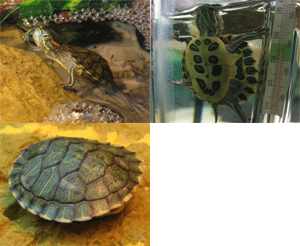
Look for an active turtle that has bright, clear, alert eyes (no swollen eyes).
Hatchlings' shells aren't has hard as older turts, and harden at about a year and the scutes nearest the tail often have a very slight movement to them. That said, however, the shell should be firm to the touch. The nail beds should be healthy and there should be no missing/broken claws. (Note: It may look like a claw on each of the back feet is missing and there are 4 where there should be 5, but this is normal.)
When you pick the turtle up, it should react in one of two ways--either it will struggle to get away, or it will withdraw into the shell as a defensive measure. It should not just passively sit/lay in your hand. (Give it a few seconds to see what it will do, it should react, though, and it should be alert.)
A healthy turtle will feel solid when you pick it up, and have a certain "heft" to it, not feel really light and "empty." This is a bit hard to explain when they only weigh X number of grams, but the difference can be felt even in small turts.
Turtles raised/living in healthy conditions on a balanced diet will have a greater chance of being healthy. Shipping is stressful, however, and you don't know the conditions they were bred and initially kept in, so nothing is 100% sure. It can take some time for symptoms indicating illness/a condition to appear, and a lot will depend on the habitat you create for it.
Finally, since not all sliders have red ears (there can be variations in color--reddish, orangy, brownish red, some don't have any red at all), I wouldn't judge the health of a turtle by how bright the coloring on the side of the head is.
But remember, nothing is 100% certain.

"You become responsible, forever, for what you have tamed." -Antoine de Saint Exupery-
 should i get ones that are basking, or ones that are swimming? the deeper thier color is the better? any help would be appreciated thanks!
 Posted: Fri Mar 17, 2006 7:30 pm buying a turtle, how do you pick a healthy one?